
Binoculars for Astronomical Viewing
Astronomical viewing with binoculars offers a unique and accessible way to explore the night sky. Unlike telescopes, binoculars are portable, easier to use, and provide a wider field of view. This guide will help you get started with using binoculars for stargazing and highlight some of the best models available.
Why Use Binoculars for Astronomy?
Binoculars are often overlooked as tools for astronomical observation, yet they offer several advantages:
- Ease of Use: Binoculars are simple to operate and require minimal setup time.
- Portability: They are lightweight and easy to carry, making them ideal for spontaneous stargazing sessions.
- Wider Field of View: Binoculars provide a broader perspective of the night sky, allowing you to see more stars and celestial objects at once.
- Comfort: Using both eyes reduces eye strain and provides a more natural viewing experience.
Choosing the Right Binoculars
Binoculars are labeled with two numbers, such as 10x50: the first is the magnification (10 times) and the second is the diameter of each objective lens in millimeters (50mm). Dividing the second number by the first gives the exit pupil, the width of the beam of light that reaches your eye: 50 ÷ 10 = 5mm for a 10x50, or about 7mm for a 7x50. An exit pupil of about 5 to 7mm suits a dark-adapted eye (the eye's pupil opens less with age).
When selecting binoculars for astronomy, consider the following factors:
- Aperture: The diameter of the objective lenses (the front lenses) determines the amount of light the binoculars can gather. Larger apertures (e.g., 50mm) are better for stargazing.
- Magnification: A magnification of 7x to 10x is ideal. Higher magnifications can be challenging to hold steady and may require a tripod.
- Optical Quality: Look for binoculars with good quality lenses and coatings to reduce glare and improve clarity.
- Comfort and Durability: Ensure the binoculars are comfortable to hold and durable enough to withstand outdoor use.
How to Use Binoculars for Stargazing
- Find a Dark Location: Light pollution can hinder your ability to see celestial objects. Try to find a spot away from city lights.
- Get Comfortable: Use a reclining chair or lie on a blanket to avoid neck strain. A tripod or binocular mount can help stabilize your view.
- Adjust the Focus: Start by focusing on a distant object during daylight to get the binoculars roughly focused. Fine-tune the focus once you start observing the night sky.
- Start with the Moon: The Moon is a great starting point. Its craters and surface details are easily visible and spectacular through binoculars.
- Explore Star Clusters and Constellations: Move on to star clusters like the Pleiades or constellations like Orion. Binoculars can reveal stars not visible to the naked eye.
- Track Satellites and Planets: Binoculars are great for following satellites and for seeing Jupiter's four large moons as tiny points of light beside the planet. Saturn's rings are too small to see clearly in most binoculars; at 15x or more on a tripod, the planet may look slightly oval.
Top Binoculars for Astronomy
Celestron SkyMaster 15x70
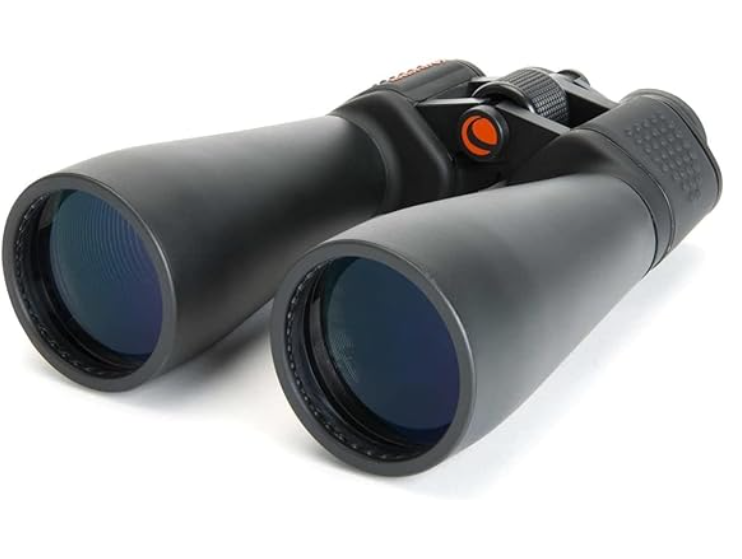
- Aperture: 70mm
- Magnification: 15x
- Exit pupil: about 4.7mm
- Features: Large 70mm objectives and BaK-4 Porro prisms for bright views of star fields and deep-sky objects; a built-in tripod adapter, which you will want at 15x; rubber-armored, water-resistant body.
Nikon 10x50 Aculon A211
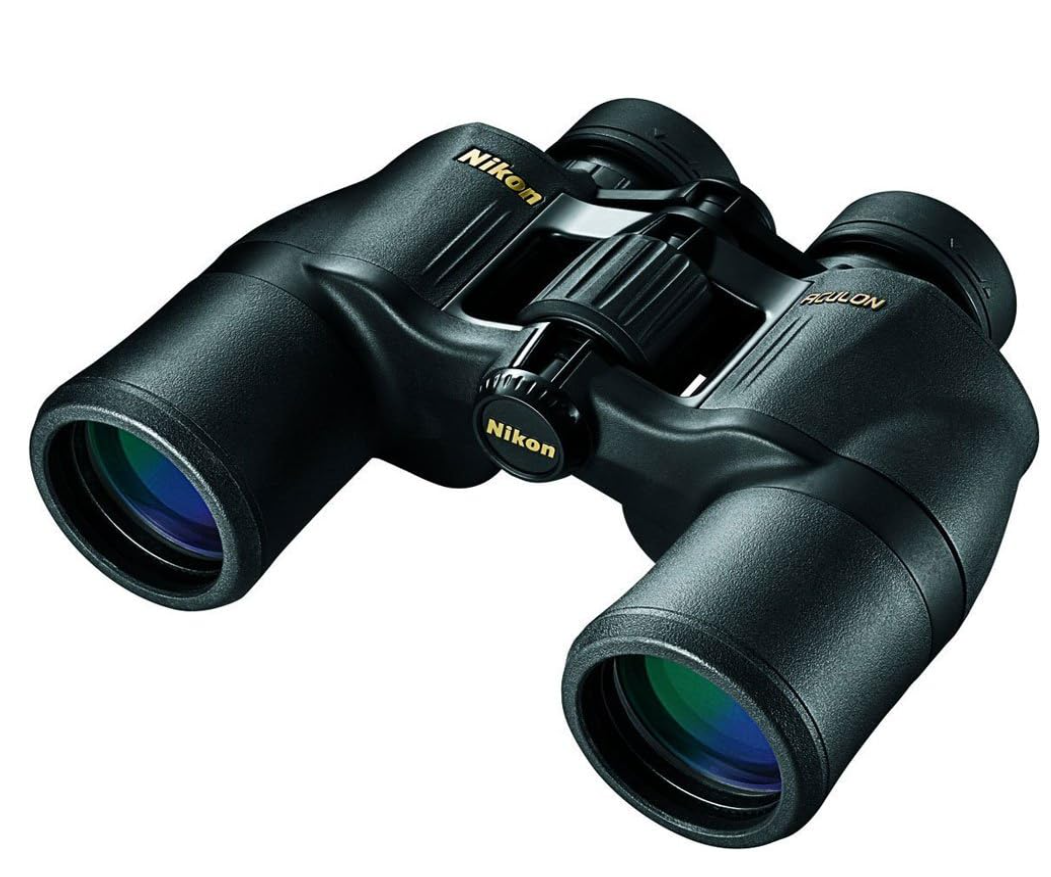
- Aperture: 50mm
- Magnification: 10x
- Exit pupil: 5mm
- Features: A lightweight Porro prism design with multicoated lenses, a smooth central focus knob, turn-and-slide rubber eyecups and non-slip rubber armor.
Vortex Optics Crossfire HD 12x50
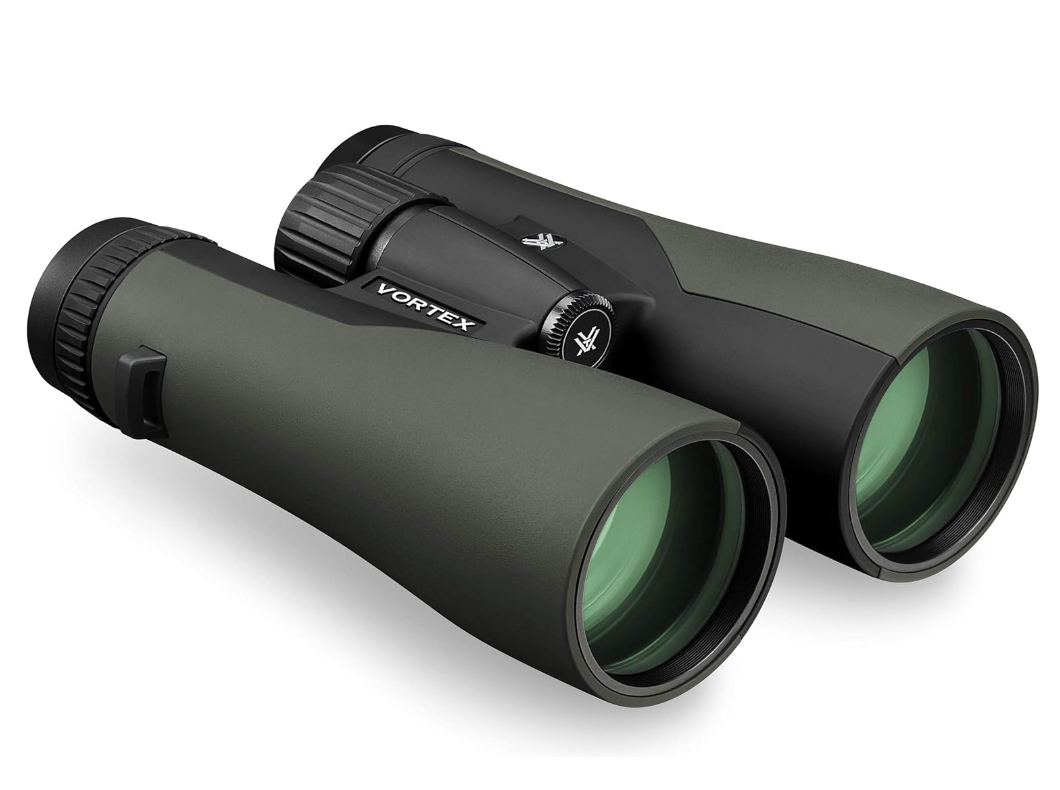
- Aperture: 50mm
- Magnification: 12x
- Exit pupil: about 4.2mm
- Features: Compact roof prism design with fully multi-coated lenses; waterproof and fogproof (nitrogen purged and O-ring sealed); twist-up eyecups and a right-eye diopter; can be attached to a tripod with an adapter; covered by Vortex's lifetime VIP warranty.
Bushnell Legacy WP 10x50
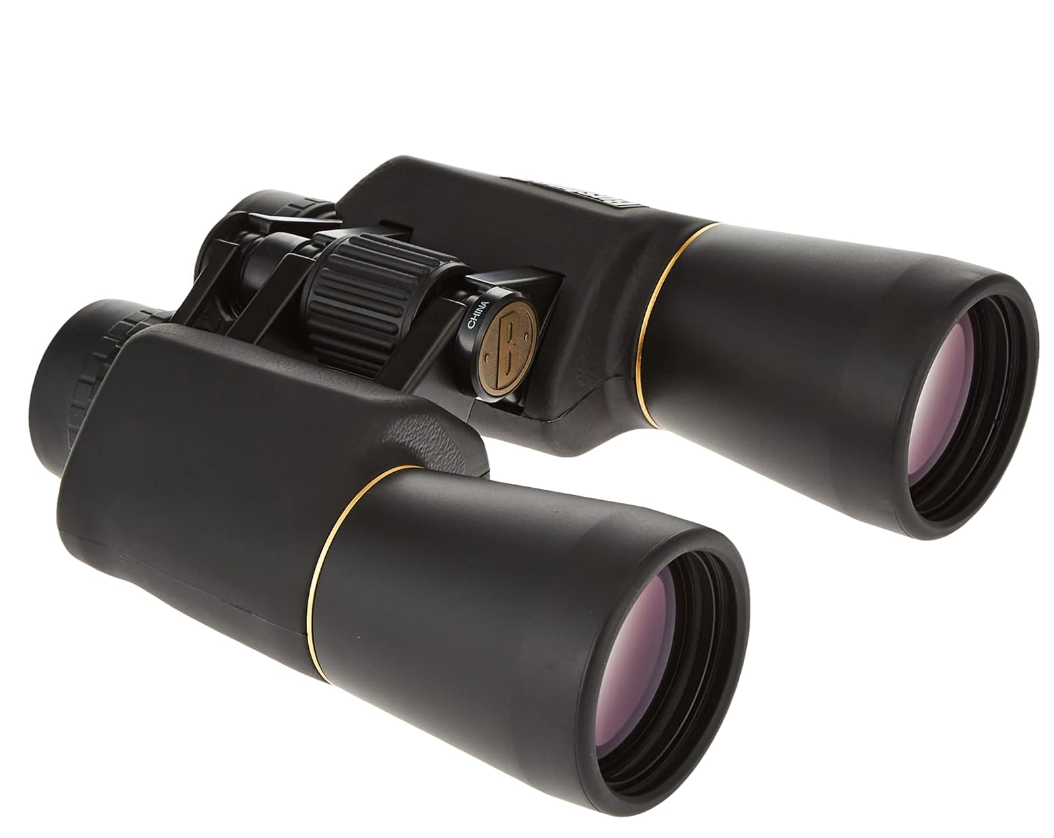
- Aperture: 50mm
- Magnification: 10x
- Exit pupil: 5mm
- Features: Wide-angle Porro prism design with BaK-4 prisms and fully multi-coated optics; waterproof and fogproof; center focus, twist-up eyecups and long eye relief; rubber armor.
Conclusion
Using binoculars for astronomical viewing is a rewarding and accessible way to explore the night sky. With the right pair of binoculars and a little practice, you can discover the wonders of the universe from your backyard. Whether you are a beginner or an experienced stargazer, binoculars offer a versatile and enjoyable stargazing experience. Happy observing!