Solar System
Our Solar System
The solar system is made up of the Sun, the eight planets, and all the other bodies that orbit the Sun: dwarf planets such as Pluto, the moons of the planets, asteroids, comets, and dust. Pluto was counted as the ninth planet from its discovery in 1930 until 2006, when the International Astronomical Union reclassified it as a dwarf planet.
Solar System Facts
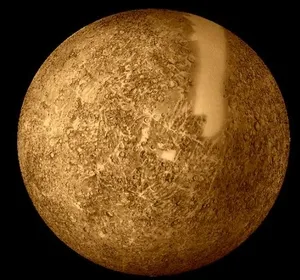
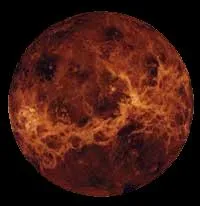
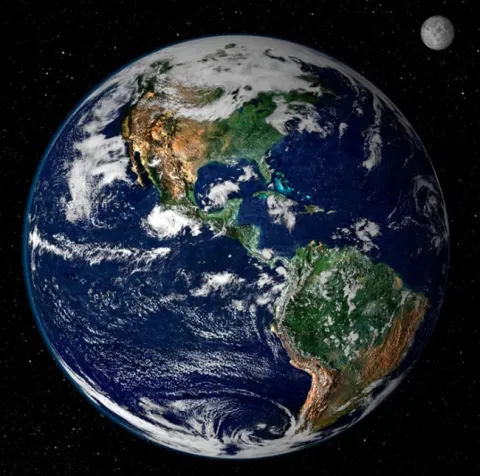
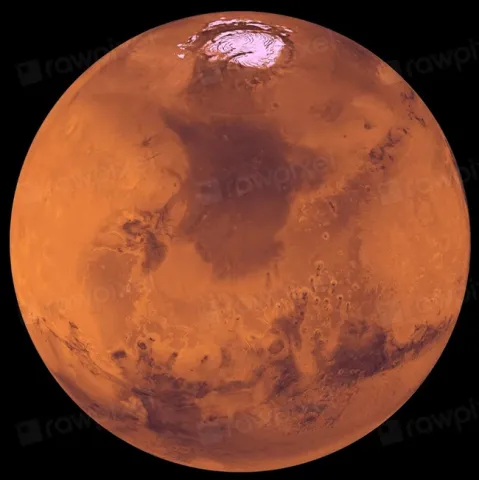
- The four planets closest to the Sun, Mercury, Venus, Earth, and Mars, are small and rocky.
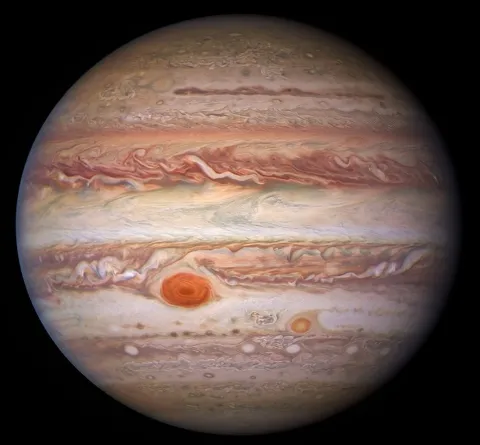
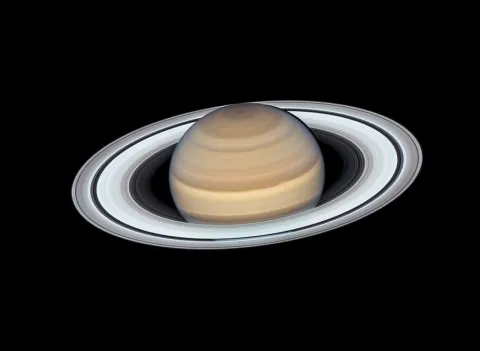
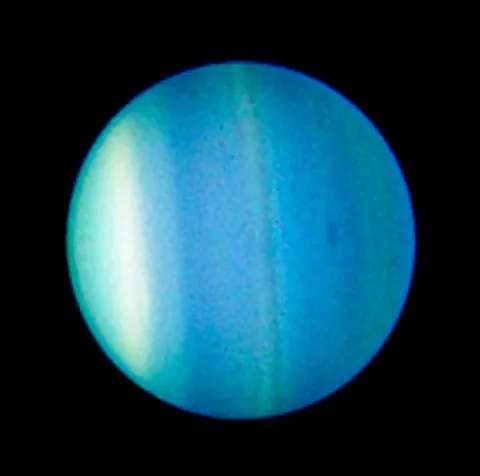
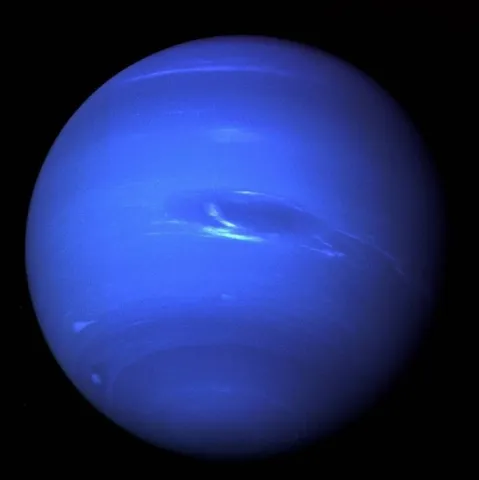
- The four outer planets, Jupiter, Saturn, Uranus, and Neptune, are much larger and have no solid surface.
- Between the inner four planets and the outer four lies the asteroid belt.
- The orbits of the planets are ellipses with the Sun at one focus, though all except Mercury's are very nearly circular. The planets all orbit in roughly the same plane, close to the ecliptic (the plane of Earth's orbit), which is tilted only about 7 degrees from the plane of the Sun's equator. Seen from above the Sun's north pole, all the planets travel around the Sun counterclockwise, and all except Venus and Uranus also spin in that same direction.
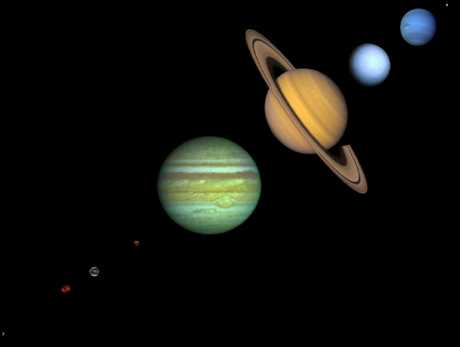
The solar system formed about 4.6 billion years ago, when part of a huge cloud of gas and dust collapsed under its own gravity. Apart from the Sun, most of the system's mass is in the eight planets, which travel on nearly circular orbits in a fairly flat disk. The four small inner planets, Mercury, Venus, Earth and Mars, are called the terrestrial planets and are made mostly of rock and metal.
Jupiter and Saturn are the gas giants, made mostly of hydrogen and helium. Uranus and Neptune are called ice giants, because much of their mass is made of water, ammonia and methane rather than hydrogen and helium. All four are far more massive than the terrestrial planets.
The solar system also has two main belts of small bodies. The asteroid belt, between Mars and Jupiter, is made mostly of rocky and metallic objects. The Kuiper belt, beyond Neptune's orbit, holds icy bodies made of frozen water, ammonia and methane. The International Astronomical Union recognizes five dwarf planets, large enough to have been pulled into a round shape by their own gravity: Ceres in the asteroid belt, and Pluto, Haumea, Makemake and Eris farther out. Much farther still, the Oort cloud is thought to surround the solar system as a vast, distant shell of icy bodies and to be the source of long-period comets.
Comets, asteroids and dust travel between these regions, while the solar wind, a stream of charged particles from the Sun, blows a huge bubble in interstellar space called the heliosphere.
For thousands of years most people believed that the Earth stood still at the center of the universe. A few thinkers, such as the Greek astronomer Aristarchus of Samos, suggested that the Earth moves around the Sun, but Nicolaus Copernicus was the first to work out a detailed, mathematical Sun-centered model, published in 1543. In the 1600s Galileo Galilei, Johannes Kepler and Isaac Newton built on his work, showing that the planets orbit the Sun and obey the same laws of physics as objects on Earth. Since then, better telescopes and robotic spacecraft have let us study mountains and craters, clouds, dust storms and ice caps on the other planets.