
News · Planets · Missions
BepiColombo is set to enter orbit around Mercury on November 21
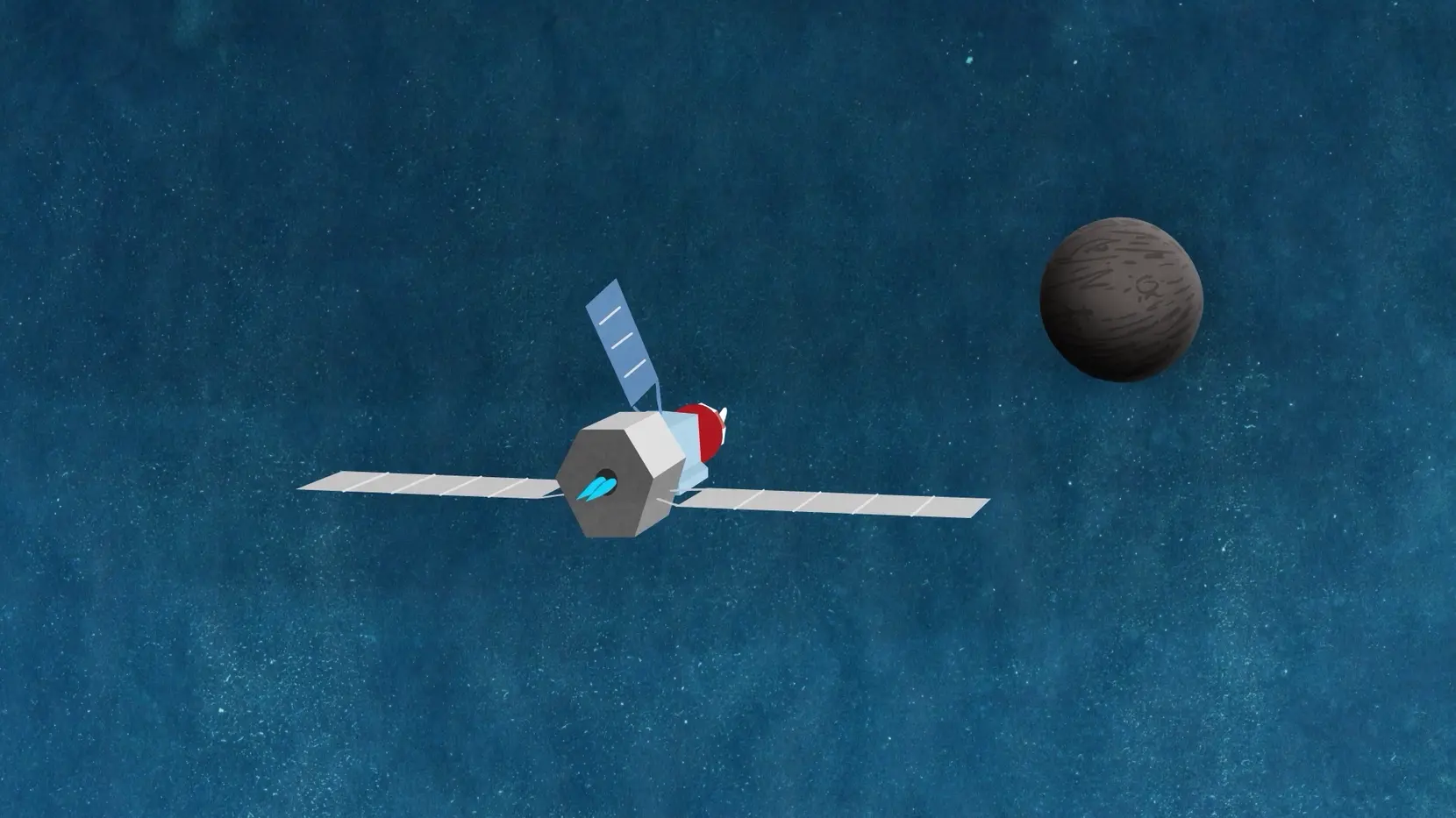
Mercury is about to get two new moons of the artificial kind. BepiColombo, a joint mission of the European Space Agency (ESA) and the Japan Aerospace Exploration Agency (JAXA), is scheduled to enter orbit around the innermost planet on November 21, 2026. It will be only the second mission ever to orbit Mercury, after NASA's MESSENGER, which orbited from 2011 to 2015.
A long way round
Getting into orbit around Mercury is surprisingly hard. The Sun's strong gravity makes a stable orbit hard to reach, and ESA says the trip takes even more energy than a mission to Pluto. BepiColombo launched on October 20, 2018, and has spent eight years shedding speed with nine planetary flybys: one of Earth, two of Venus and six of Mercury itself, the last on January 8, 2025.
The arrival was originally planned for December 2025. Problems with the electric thrusters on the mission's propulsion stage, the Mercury Transfer Module, forced engineers onto a gentler path that saved the mission but pushed arrival back by about a year.
On September 3, 2026, the transfer module separated from the stack, as planned, beginning the arrival phase. What remains are the two science orbiters joined together: ESA's Mercury Planetary Orbiter, carrying instruments to map the surface and probe its composition and interior, and JAXA's Mio, built to measure Mercury's magnetic field, charged particles and thin sodium atmosphere.
The next few weeks
- November 21: the two orbiters, still stacked, enter Mercury orbit.
- December 9–10: Mio and the Planetary Orbiter separate into their own orbits.
- December 16: the Planetary Orbiter drops the sunshield that protected Mio during the cruise.
- April 6, 2027: routine science operations begin.
ESA notes that exact dates may change for operational reasons.
Why it matters
ESA calls Mercury the least explored planet of the inner solar system. With two orbiters working at the same time, one focused on the planet itself and one on its magnetic surroundings, BepiColombo should give the most complete picture yet of this small, sunbaked world. Mercury is also a rewarding target for backyard observers when it swings far enough from the Sun; see our Mercury and solar system pages for tips.
What comes next: ESA plans live coverage of the arrival on its BepiColombo updates page, and a graphic on ESA's timeline page shows the mission running until December 2029.