
Telescope Mounts for Astrophotography
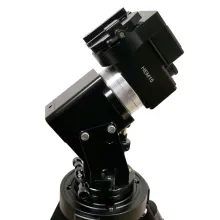
Astrophotography requires precision and stability, making the choice of telescope mount a critical decision for capturing stunning celestial images. The two main types of drive used in astrophotography mounts today are worm gears and strain wave (harmonic) gears. These mounts differ in their design, tracking accuracy, and applications, making it important to select the right one based on your requirements. This article explores the differences between these mounts and their motor types (stepper vs. servo), and gives examples for beginner, intermediate, and advanced astrophotographers.
Strain Wave vs. Worm Gear-Based Mounts
Worm Gear Mounts
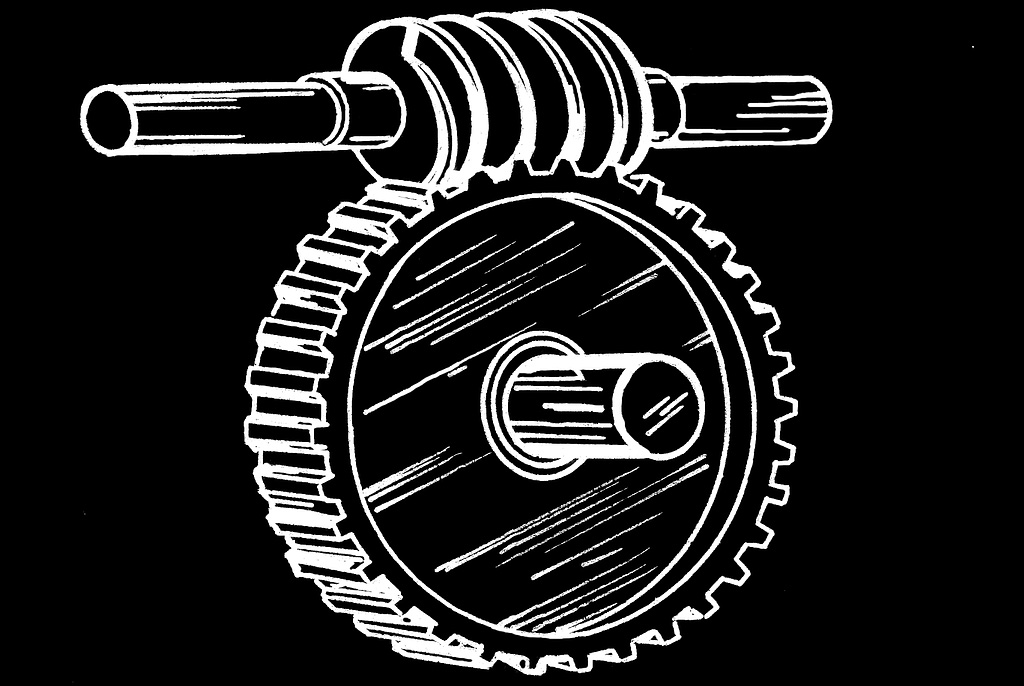
Worm gear mounts have long been the traditional standard for equatorial mounts in astrophotography due to their precision and stability in tracking celestial objects. These mounts utilize a worm gear mechanism, where a helical screw (the worm) meshes with a toothed wheel (the worm wheel) to provide smooth and consistent motion along the right ascension axis. A well-made, well-adjusted worm drive gives smooth, high-resolution tracking with little backlash, making it ideal for long-exposure astrophotography where even minor inaccuracies can result in image distortion. As a result, worm gear mounts have been favored by astrophotographers seeking reliable performance and pinpoint accuracy for capturing the night sky’s intricate details.
Pros:
- High Tracking Accuracy: Worm gears offer precise tracking for long-exposure astrophotography, making them ideal for deep-sky objects.
- Established Technology: Worm gear mounts are reliable, have a longer track record, and are supported by a wide range of software.
- Predictable Periodic Error: The error repeats with each turn of the worm, so many mounts can learn and cancel much of it with periodic error correction (PEC), and they autoguide easily.
Cons:
- Periodic Error: A key drawback of worm gear systems is the inherent periodic error caused by small imperfections in the gears. This error can be mitigated but never completely eliminated.
- Maintenance: Over time, worm gears may require periodic adjustments and maintenance to maintain optimal performance.
- Weight: Worm-gear equatorial mounts need counterweights to balance the telescope, so the whole setup is heavy. Tracking also suffers if the mount is loaded near its limit; a common rule of thumb for imaging is to stay at about half to two-thirds of the rated payload.
- Best Use: Worm gear mounts are ideal for stationary astrophotography setups where accuracy over longer exposures is a priority.
Strain Wave (Harmonic Drive) Mounts
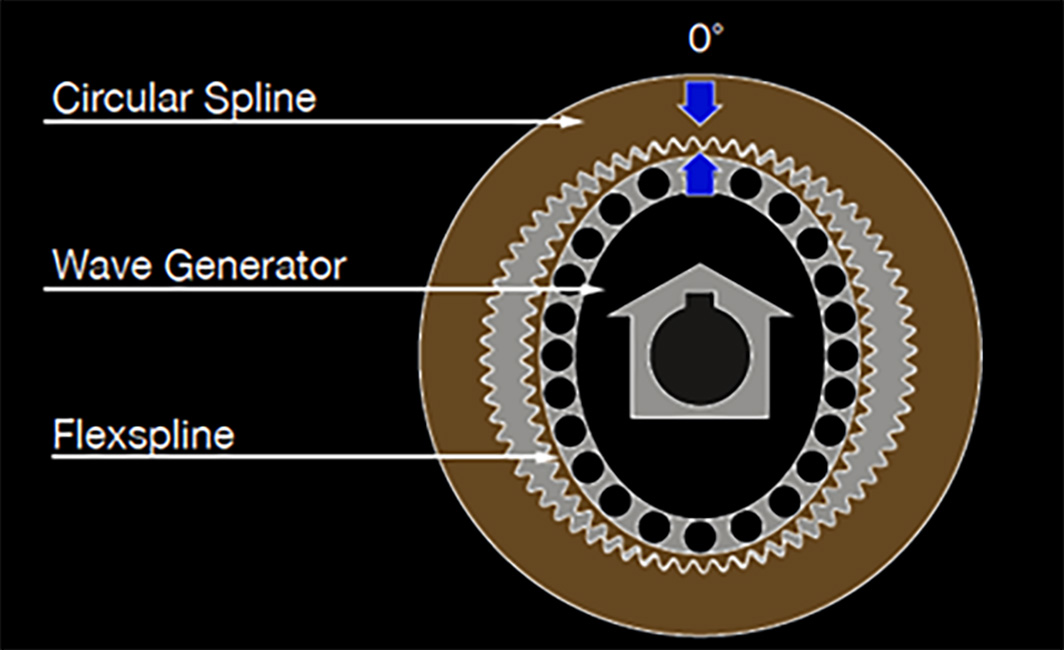
Strain wave gears, often called harmonic drives (a trade name of the Harmonic Drive company), were developed for robotics and aerospace and have been used in telescope mounts since the late 2010s. The gear has three parts: an oval wave generator that spins inside a thin, flexible toothed ring called the flexspline, which in turn meshes with a rigid outer ring of teeth (the circular spline). As the wave generator turns, the flexspline is pushed into mesh at two points, and because it has slightly fewer teeth than the outer ring it creeps around slowly. This gives very high reduction ratios and almost no backlash in a small, light package. Mounts built with strain wave gears can carry a heavy telescope relative to their own weight, and many can be used with no counterweight for moderate loads.
Pros:
- Zero Backlash: The strain wave mechanism virtually eliminates backlash, resulting in precise pointing and tracking.
- High Torque in Compact Form: These mounts provide a high torque-to-weight ratio, making them lighter and more portable.
- No Counterweight Needed (for moderate loads): Many strain wave mounts can carry a small to mid-size imaging setup without counterweights, which makes them much lighter to carry.
Cons:
- Periodic Error and Guiding: Strain wave gears usually have larger and less regular periodic error than good worm gears (ZWO, for example, specifies up to ±20 arcseconds for its AM5), so autoguiding is effectively required for long exposures. High-end models add high-resolution encoders to correct this.
- Cost: Strain wave mounts usually cost more than worm gear mounts with a similar payload.
- Complexity: The mechanism is more complex and may be harder to repair if issues arise.
- High-Pitched Noise: These mounts can produce a high-pitched noise during operation, which some users find distracting.
- Best Use: Strain wave mounts are excellent for mobile astrophotographers looking for compact, lightweight solutions with superior tracking precision.
Stepper Motors vs. Servo Motors
Stepper Motors
Stepper motors divide a full rotation into a fixed number of steps, typically 200 (1.8 degrees each), and drivers split each step into many smaller microsteps, providing precise control over position. They are commonly used in budget and mid-range mounts.
Pros:
- Precision: Stepper motors offer fine control, making them well-suited for accurate tracking and guiding.
- Reliability: With fewer components, stepper motors are generally reliable and require less maintenance.
- Cost-Effectiveness: Stepper motors are less expensive, making them common in mounts for beginners.
Cons:
- Torque at Speed: Stepper motors have good holding torque at low speeds, but their torque falls off as speed rises, which limits slewing speed.
- No Feedback Loop: Without a feedback loop, stepper motors are more prone to missing steps, which can cause tracking errors.
Servo Motors
Servo motors use a feedback loop (via encoders) to control position, speed, and torque. This makes them ideal for mounts requiring high performance and precision.
Pros:
- High Torque: Servo motors deliver high torque, enabling them to handle heavier payloads with minimal tracking errors.
- Smooth Motion: The feedback loop ensures smoother tracking and less vibration, critical for high-end astrophotography.
- Speed: Servos offer faster slewing speeds, reducing time between targets.
Cons:
- Complexity: Servo systems are more complex and can be more challenging to repair.
- Cost: Typically, servo motors are found in premium mounts due to their higher cost.
- Best Use: Servo motors are preferable for advanced and professional astrophotographers who require high accuracy and the ability to manage heavier equipment.
Examples for Different User Levels
Beginner Astrophotography Mounts
Budget Worm Gear Mounts: These mounts offer good tracking accuracy at a lower price, ideal for entry-level setups.
- Examples:
- Sky-Watcher EQM-35 Pro: An affordable entry-level mount with good tracking accuracy and a payload capacity of up to 10 kg.
- Orion Sirius EQ-G: A long-popular entry-level GoTo equatorial mount for beginner deep-sky astrophotography. Orion closed its US operations in 2024, so it is now mainly found used.
Entry-Level Strain Wave Mounts: More expensive than budget worm gear mounts, but very portable and quick to set up.
- Example:
- ZWO AM5: A compact strain wave mount with almost no backlash that can carry a moderate imaging setup without a counterweight, well suited to grab-and-go setups.
Intermediate Astrophotography Mounts
Middle-Range Worm Gear Mounts:
- Sky-Watcher EQ6-R Pro: Highly popular, supports heavier payloads, and uses belt drives between the motors and the worm gears for smoother motion.
- Celestron CGEM II: A robust mount with solid construction and reliable GoTo capabilities.
Middle-Range Strain Wave Mounts:
- iOptron HEM27: A hybrid equatorial mount with a strain wave gear on the right ascension axis and a worm gear on the declination axis.
Advanced Astrophotography Mounts
Premier Worm Gear Mounts:
- Astro-Physics Mach2GTO: A high-end worm gear mount with absolute encoders on both axes, offering extreme precision and smooth tracking for long-exposure astrophotography.
- 10Micron GM1000 HPS: This premium mount has encoders on both axes, making autoguiding optional.
Premier Strain Wave Mounts:
- Rainbow Astro RST-135: An ultra-portable strain wave mount that carries a large payload for its very small size, popular with traveling astrophotographers.
- Hobym Crux 320HD: A large strain wave mount from Hobym's Crux line, built for heavier telescopes in portable or observatory use.
Final Thoughts
For beginners, a traditional worm gear mount with stepper motors is often the best starting point due to its affordability and reliability. As you progress, a strain wave mount becomes a compelling option if portability matters most, while premium worm gear mounts with encoders and servo motors offer the highest unguided accuracy. Selecting the right mount is crucial, so it’s worth considering your current equipment, imaging goals, and future aspirations before making a decision.
With these options in mind, you can choose a mount that aligns with your experience level and budget, ensuring a successful and enjoyable astrophotography journey.