
News · Mars · Missions
Four volunteers finish NASA's second yearlong Mars simulation
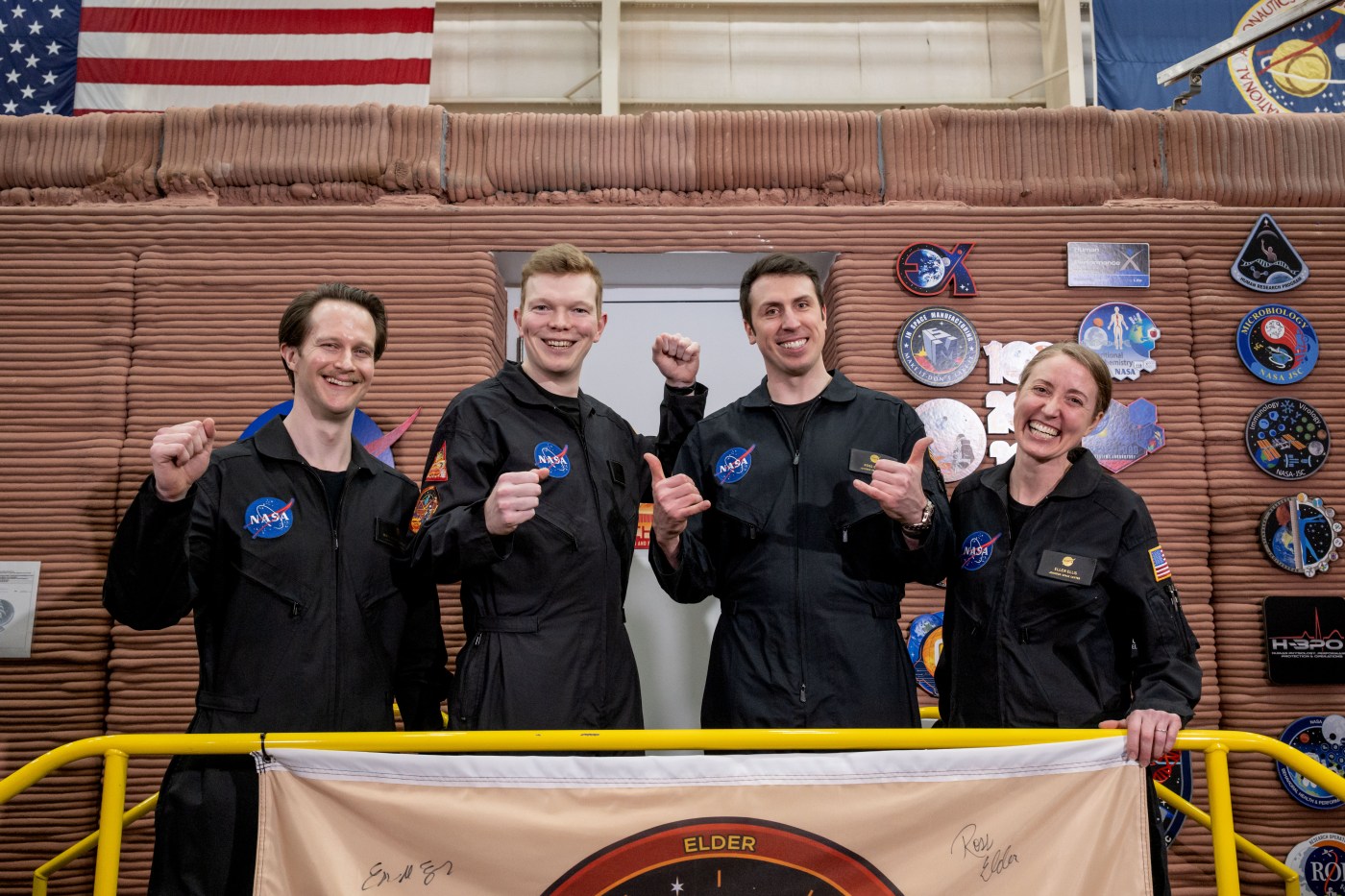
Four volunteers have stepped out of a mock Mars base in Houston after more than a year inside. The crew of NASA's CHAPEA Mission 2 (Crew Health and Performance Exploration Analog) left their habitat at Johnson Space Center on October 31, 2026, after 378 days. NASA shared the crew's reflections on November 9.
The crew entered the habitat on October 19, 2025. It was NASA's second yearlong Mars surface simulation; the first ended in July 2024.
Who was inside
The crew was commander Ross Elder, a test pilot; medical officer Ellen Ellis, a U.S. Space Force officer; flight engineer James Spicer, who has worked on satellite communications and spacecraft development; and science officer Matthew Montgomery, an engineer with experience in robotics and indoor farming.
They lived in Mars Dune Alpha, a 3D-printed habitat of about 1,700 square feet. To feel like Mars, messages to and from "Earth" were delayed by up to 22 minutes each way, so the crew had to solve many problems on their own.
What they did
The crew carried out simulated Marswalks, used a drone and a rover to survey terrain and collect rocks, kept the habitat running, and 3D-printed parts. They grew hydroponic crops and tested seed germination in simulated Martian soil. Throughout the year, researchers tracked their health, nutrition, exercise and performance, with special attention to the trade-offs a real crew would face when supplies are limited.
"We're inspired every day knowing that the data we're generating is informing Martian mission planning," said Spicer.
Why it matters
A real crewed trip to Mars would last years, far from help. Analog missions like CHAPEA let NASA learn how people cope with isolation, delays and limited resources before anyone leaves Earth. Project scientist Sara Whiting said, "This is really the now moment for this kind of data."
The real Mars is putting on a good show this month. Look east before dawn for its orange glow close to bright Jupiter, near the star Regulus in Leo. Learn more on our Mars page.
What comes next: NASA researchers will now analyze the health and performance data from the 378-day mission to help plan future Mars expeditions.