
News · Comets · Telescopes
Euclid space telescope discovers its first new comet
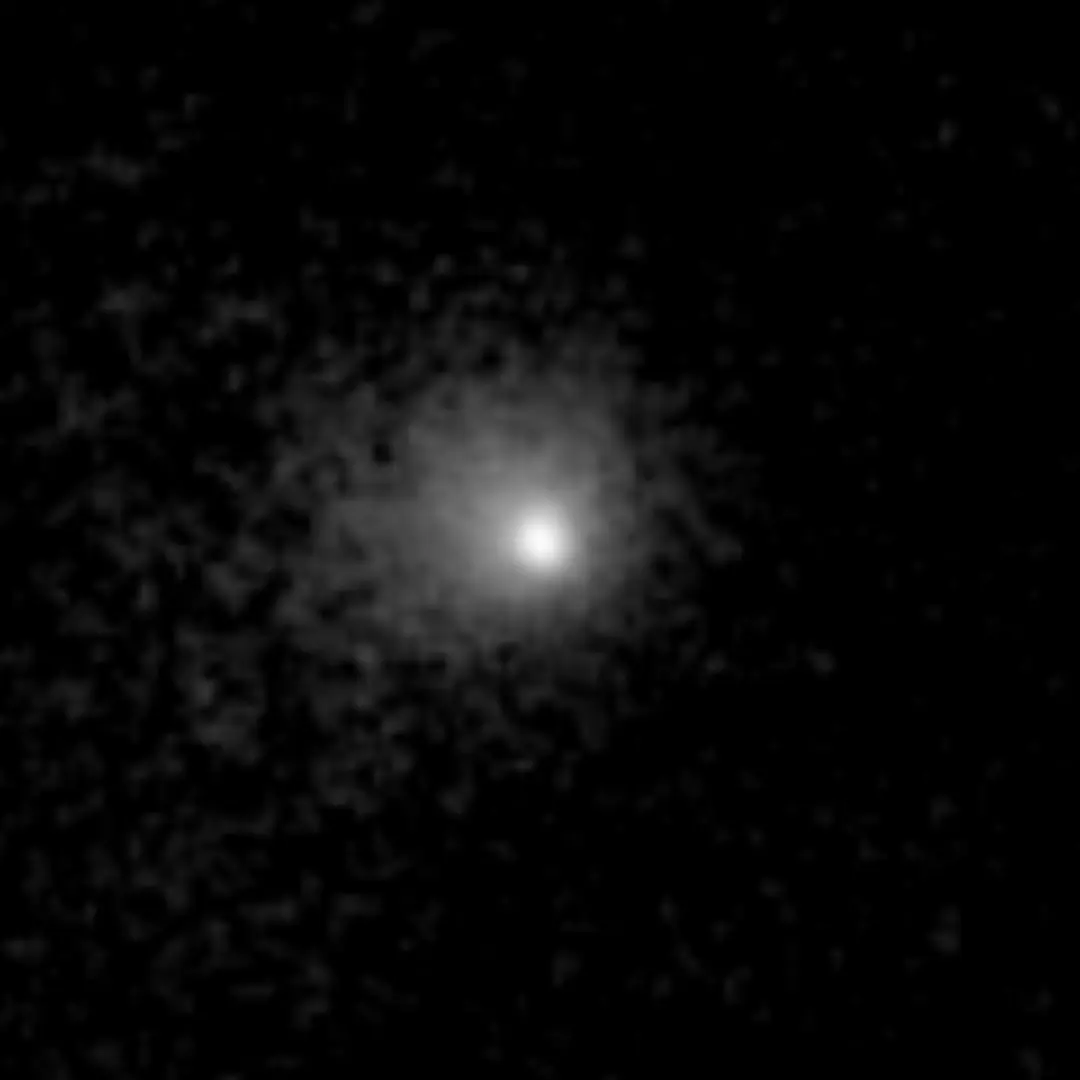
The European Space Agency's Euclid telescope was designed to chart billions of galaxies, not to hunt comets. Even so, it has just found its first one. ESA announced on October 19, 2026, that Euclid spotted a previously unknown comet in images taken between September 16 and 24. It now carries the official name C/2026 S1 (Euclid).
A streak in the deep field
Mikko Pöntinen of the University of Helsinki, working with the Euclid Consortium's solar system team, found it using moving-object software he wrote himself. Euclid's long exposures, more than nine minutes each, turned the moving comet into a short streak against fixed stars and galaxies. "I was excited to see my software flag a 'streak' smeared across several images," he said.
By predicting where the object should appear next, Pöntinen found it in five separate fields of the Euclid Deep Field North survey, 16 exposures in all. A fuzzy glow around it showed it was an active comet giving off dust and gas. No known comet or asteroid matched, so the observations went to the International Astronomical Union's Minor Planet Center, which confirmed the discovery on October 8.
An unusual orbit
The comet is about 1.3 billion km from Earth and travels far outside the plane where the planets orbit. From the Sun's point of view, it is currently almost "straight up." Its orbit takes thousands of years to complete, and astronomers will refine that figure as follow-up observations come in from ground-based telescopes.
Finds like this are rare for Euclid. It deliberately avoids the band of sky along the planets' plane, where most comets and asteroids are found, because sunlight scattered there adds glare. It also looks at each patch of sky only once, so it cannot go back for a second look. Euclid archive scientist Bruno Altieri said the team expects very few comet discoveries.
The new comet is not a candidate for ESA's future Comet Interceptor mission, but ESA says the discovery gave the two teams a useful practice run for raising an alert.
ESA has not published a brightness. At its great distance this is a job for large telescopes, so don't expect a binocular comet. For sky events you can enjoy with your own eyes this season, see our major meteor showers guide.
What comes next: further ground-based measurements will tighten the comet's orbit and show whether it brightens as it moves.