
News · Telescopes · Missions
NASA's Swift observatory ends its mission and burns up after 22 years
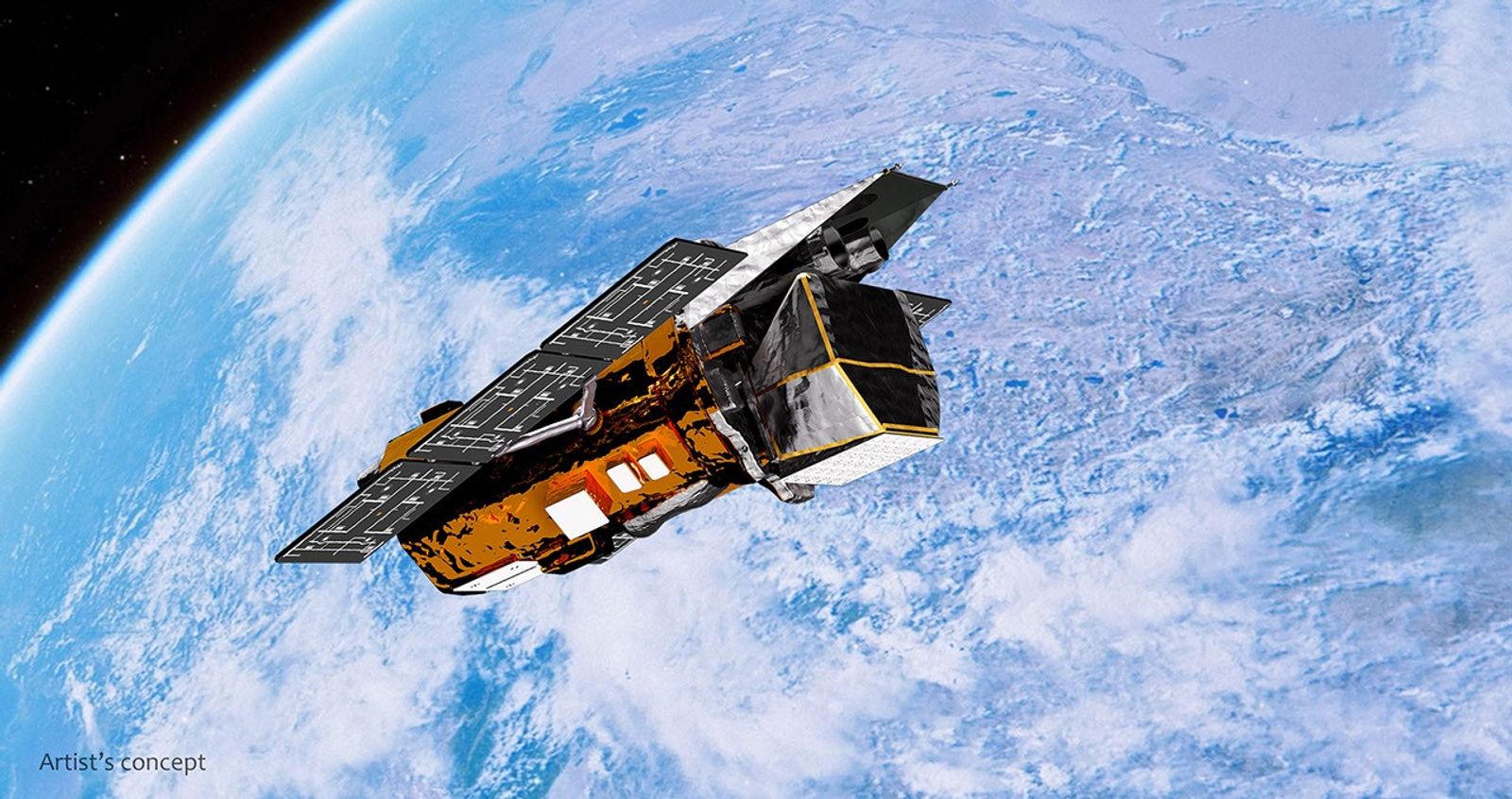
NASA's Neil Gehrels Swift Observatory is gone. The U.S. Space Force confirmed that the spacecraft re-entered Earth's atmosphere at 7:39 a.m. EST on Wednesday, November 4, 2026, over the North Sumatra region of Indonesia. NASA expected most of it to burn up on the way down.
Swift's science work had already stopped. Its orbit had been sinking for years, and once it dropped below about 171 miles (275 km), air drag made it impossible to hold the telescopes steady on a target. It took its final observation on October 20, and NASA declared the mission over on October 23.
A rescue that didn't happen
NASA had tried to save Swift. In September 2025 it hired Katalyst Space of Flagstaff, Arizona, to send a robotic spacecraft called LINK to grab Swift and push it higher. LINK launched in July 2026 on a Pegasus XL rocket, but suffered intermittent communication losses and trouble controlling its orientation. NASA and Katalyst dropped the capture attempt, NASA ended its part on September 3, and LINK itself re-entered on September 25. The busy recent solar maximum, which puffs up the upper atmosphere, sped up Swift's decline.
Why Swift mattered
Swift launched on November 20, 2004, to chase gamma-ray bursts, the most powerful explosions known. These flashes can fade within seconds, so Swift was built to swing around quickly, catch the afterglow with its X-ray and ultraviolet/optical telescopes, and alert other observatories. It was designed for a two-year mission and worked for more than ten times that long.
By NASA's count, Swift observed more than 2,000 gamma-ray bursts and over 1,400 supernovae, could schedule up to 75 targets a day, and fed roughly 7,000 published papers. In 2005 it caught the first afterglow of a short gamma-ray burst, which lasted just 0.03 seconds. Short bursts like that helped confirm that colliding neutron stars cause them. Swift also studied black holes in distant galaxies, flaring stars, and even comets and asteroids.
Shawn Domagal-Goldman, who leads NASA's astrophysics division, called it "an incredible, lasting return on investment for the nation." The observatory was renamed in 2018 for Neil Gehrels, its first principal investigator.
What comes next: Swift's archive of nearly 22 years of data, including more than 1.5 million ultraviolet and optical images, stays public, and NASA says it will keep producing science for years.